
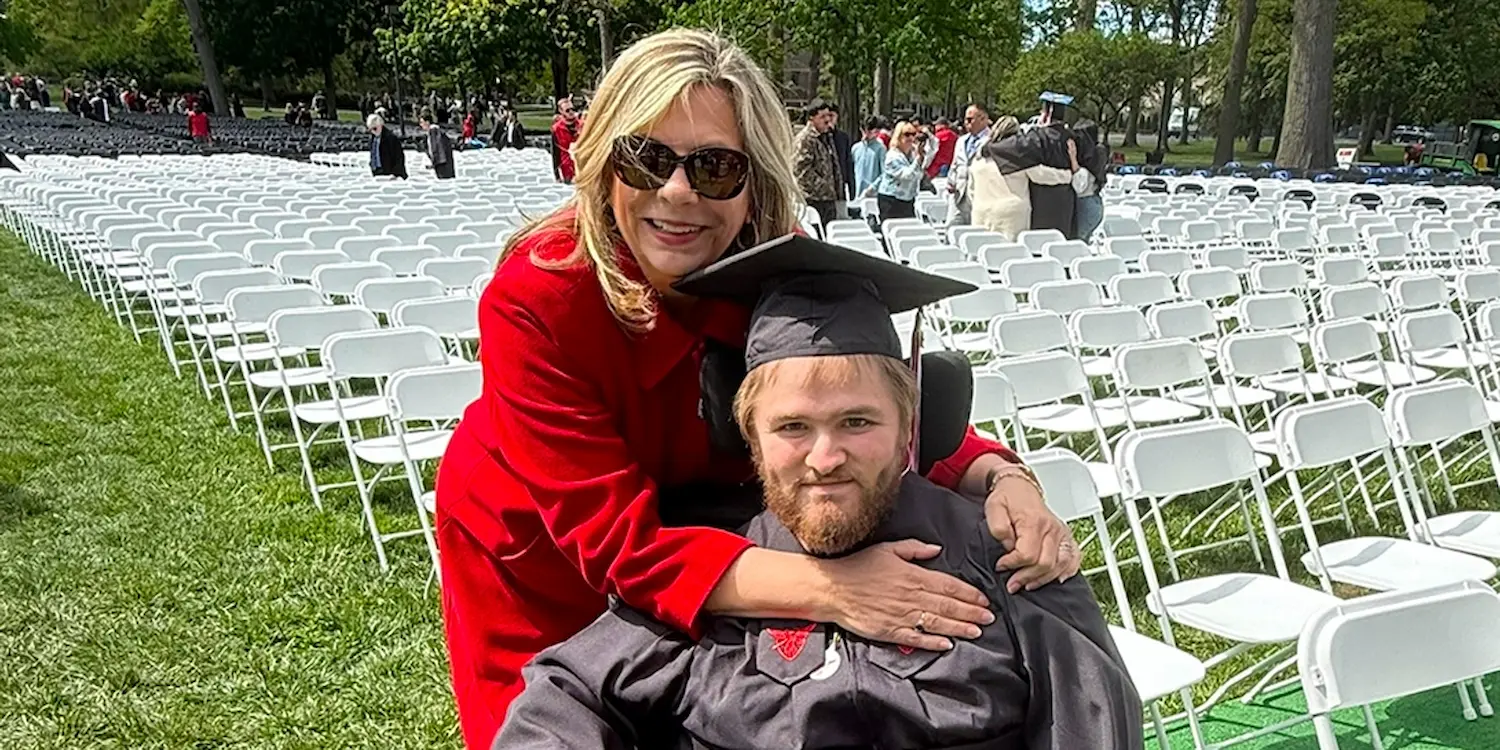
When my three-year-old son Christopher was diagnosed with Duchenne muscular dystrophy in 2004, my family joined a disease community that could only dream of clinical trials. We could only hope for research opportunities that might help us face a cruel and crippling disease that would almost certainly kill our children during their teens and twenties.
At a family conference in 2005, research sessions included much discussion of mouse and dog models of the disease, but there were no clinical trial announcements or data releases from ongoing studies. The frustrated parents attending drew Xs through hand-drawn cartoons of mice as a form of protest. The meaning behind those drawings was clear: we needed to speed up the research process if any of us in that room had any hope of saving our kids. It was at that meeting that I knew I had found my tribe.
This community’s hard work in providing resources for animal studies, patient registries, and natural history data finally moved the needle. Within years of that conference, several clinical trials aimed at tackling both the genetic cause and the various symptoms of Duchenne began.
Recruiting patients and their families in these early trials was never a problem for such an eager and invested community, even though participation required extensive travel, frequent trial visits, invasive and uncomfortable procedures, and rigorous functional testing that was often heartbreaking. Those who did not meet trial criteria cheered from the sidelines for successful results but were also envious of the opportunity to participate and perhaps stop or slow disease progression. Back in those days, we did what was asked of us and were grateful for any opportunity to participate in a trial.
In one study, a small group of patients aged 7–13 from all corners of the U.S. traveled to a single trial site in the Midwest once a week for over a year, enduring infusions of an experimental therapy. In another, a phase 3 placebo-controlled trial for a different infusion-administered therapy, a group of over 150 similarly aged kids traveled weekly for two years to a handful of global sites.
The children in those studies lost out on a lot of school, social, and family time during critically formative years. Their parents sacrificed work hours, family responsibilities, vacation time, financial resources, energy, and more. And for the most part, little has changed. Difficult travel requirements are still part of most Duchenne studies and clinical trials.
Both then and now, participants in Duchenne studies typically endure countless blood and urine labs, imaging procedures, and functional strength tests after expending considerable energy traveling to trial sites. These are less than optimal circumstances for gathering data in children, and some of our trial outcomes have been scrutinized as a result. Muscle biopsies, overnight hospital stays, frequent post-dosing surveillance, delayed reimbursement of travel expenses, and whitecoat syndrome are other burdens of Duchenne clinical trial participation.
Despite these difficulties, the decades of work done by families, advocacy groups, scientists, regulators, sponsors, and, most importantly, trial participants have paid off. Families receiving a Duchenne diagnosis today have a far different and more positive treatment and research landscape to navigate. There are now eight approved therapies for the disease, and several others are under FDA review or in the near-term pipeline.
But while we have come a long way, the complexity of Duchenne continues to make clinical trial design particularly challenging for sponsors, and for patients and families. Trials are long, disease progression is varied, patient sub-populations are small, and natural history is evolving as we are now in the era of treatment. Most importantly, trial participation is still too hard for patients and families, and there is ample room for improvement and innovation.
Many parents at that 2005 conference have since buried their children, and hundreds of us are now caring for the adults living with advanced disease progression who helped pave the way to vastly improved disease management. We should honor their contributions and their sacrifice by striving for trial designs that work better for children, adults, families, and even sites and investigators.
After spending decades advocating for Duchenne families and witnessing firsthand the sacrifices required to participate in research, I knew the industry needed to think differently about access. That’s what drew me to Science 37 and its mission to help make research participation more accessible through a Direct-to-Patient Site model, giving more families greater opportunity to participate in the hope and progress that clinical research can bring. I look forward to sharing my work with you as we help improve access and equity. Everyone deserves the opportunity to participate.
Learn more about Science 37's Direct-to-Patient Site and how our model makes clinical trials more accessible to patients and their families.