



Five Phase 3 Trials Inspected by the FDA
between February 2024 and October 2025
Consistent "No Action Indicated" (NAI) Classifications
the Highest Possible Classification
Zero Form 483s Issued
with No Objectionable Conditions or Practices Identified

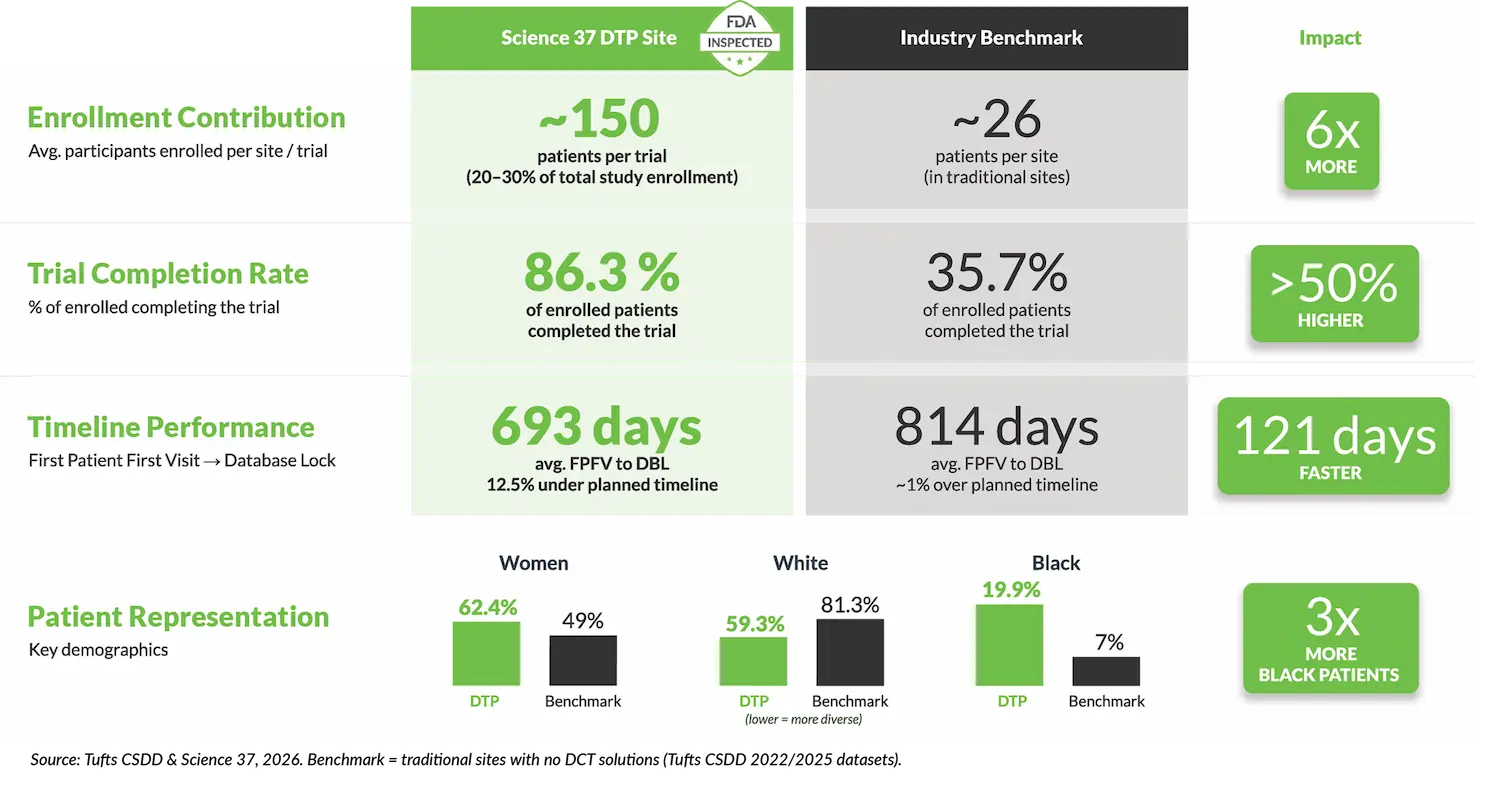
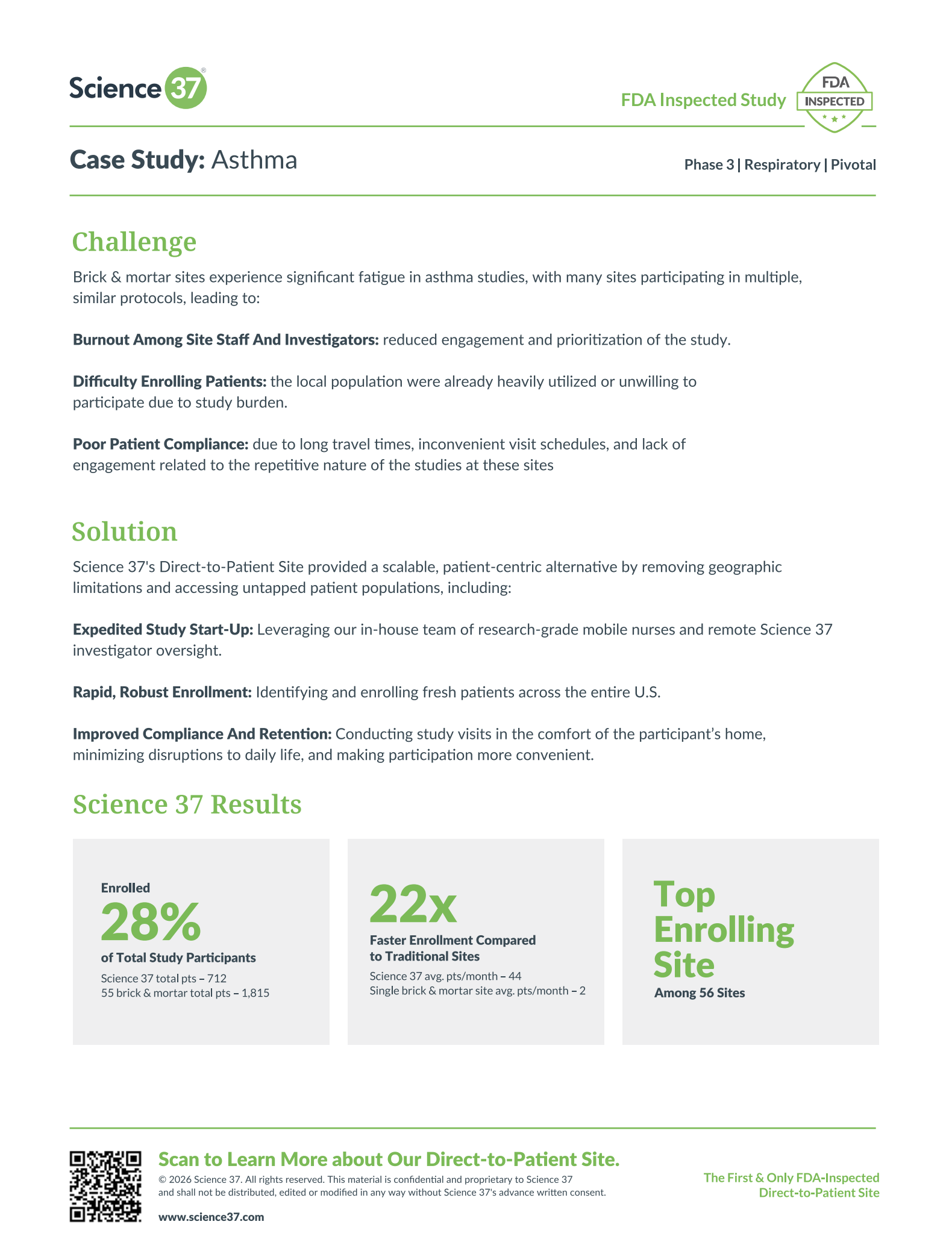
Science 37 was the top enrolling site, contributing 28% of total enrolled patients over a 15-month window. Science 37 enrolled 44 patients per month, demonstrating an enrollment velocity 22x greater than traditional brick-and-mortar sites (averaging only 2 patients per month), and reducing the study’s overall time-to-target enrollment.
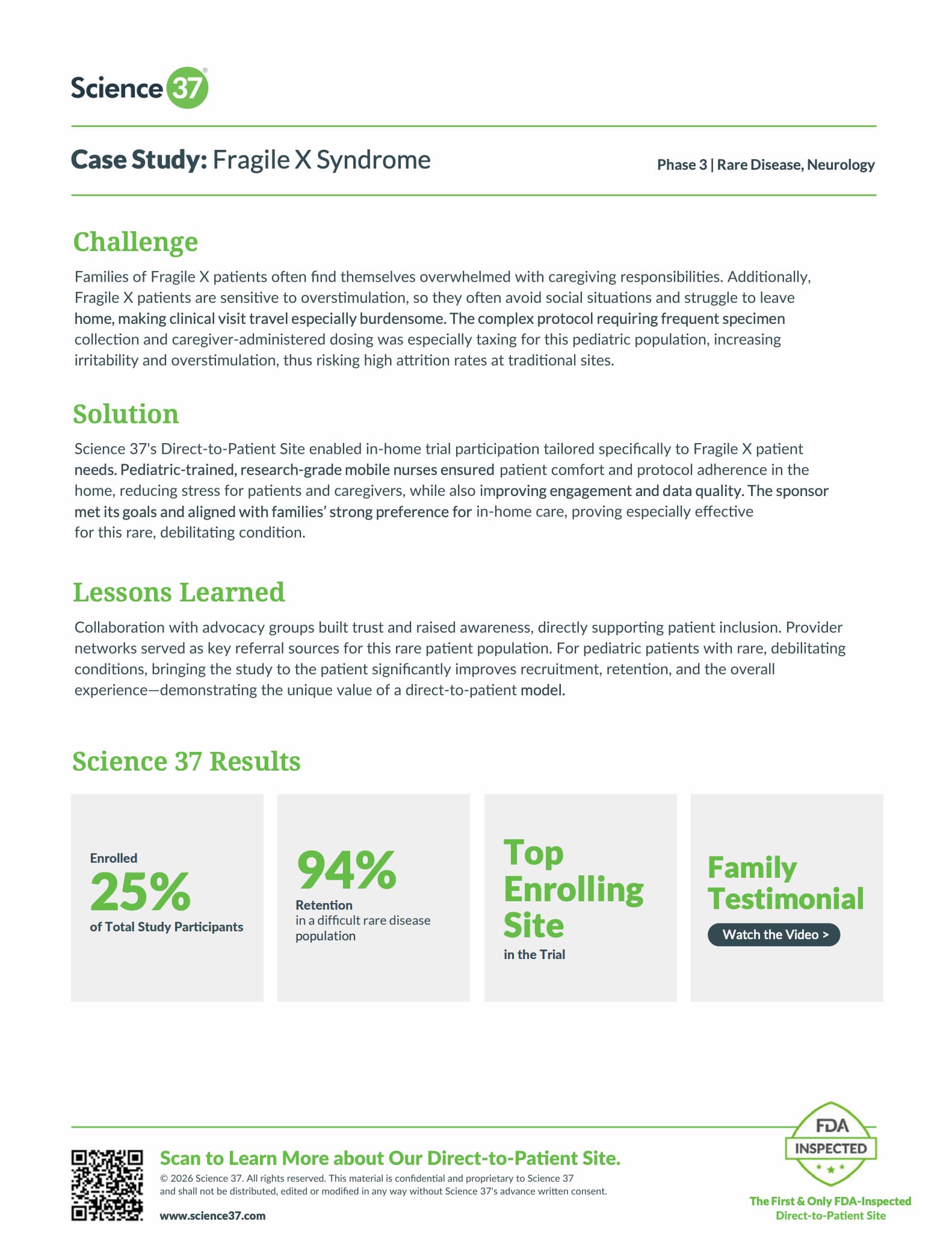
Science 37 was the top enrolling site, contributing 25% of all randomized patients nationwide. Through its Direct-to-Patient Site, which proved well-suited for this hard-to-enroll, rare disease population, including pediatric patients, Science 37 achieved a 94% patient retention rate.
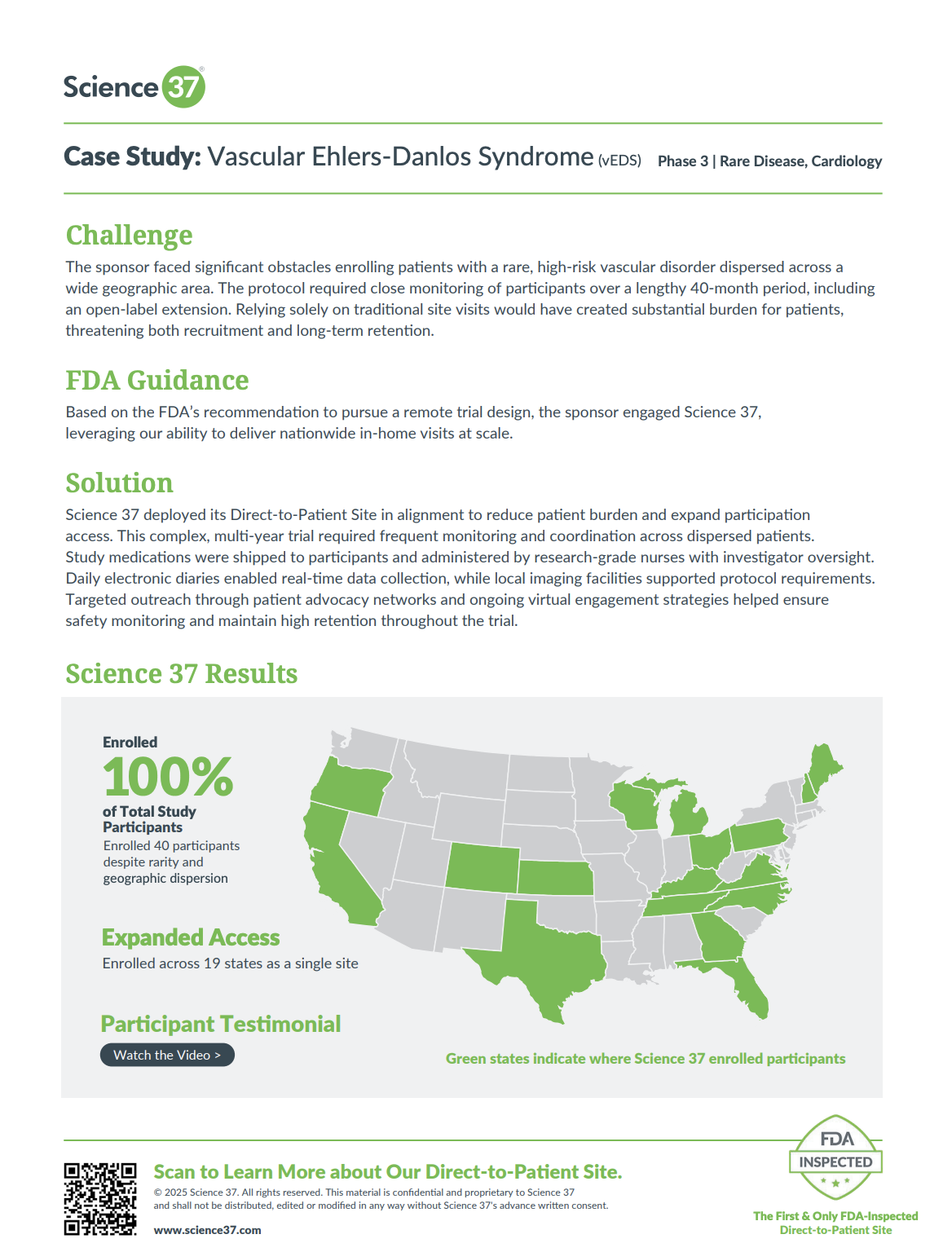
Science 37 enrolled all study participants across 19 U.S. states as a single Direct-to-Patient Site, successfully managing a difficult-to-enroll population with a rare genetic disorder, limited eligible patients, broad geographic dispersion, and a complex, closely monitored, long-duration (40 months with OLE) protocol.
Arteriovenous Fistula
Atrial Fibrillation (AFib)
Atrial Fibrillation (AFib) at Risk of Stroke
Pediatric Hypertension
Pulmonary Arterial Hypertension
Vascular Ehlers-Danlos Syndrome (vEDS)
Acute Migraine
Alzheimer's
Bipolar Depression
Cluster Headache
Epilepsy
Fragile X Syndrome (FXS)
GM2 Gangliosidosis
Huntington's Disease
Idiopathic Hypersomnia
Major Depressive Disorder (MDD)
Migraine
Multiple Sclerosis
Narcolepsy
nOH in Multiple System Atrophy
Parkinson's Disease
Rare Neurodevelopmental Disorder
Restless Leg Syndrome
Seizure
Spinal Muscular Atrophy
22q11 Deletion Syndrome (Pediatric)
Acne Vulgaris
Alopecia
Epidermolysis Bullosa
Face and Neck Atopic Dermatitis
Herpes Labialis
Moderate Acne
Moderate to Severe Atopic Dermatitis
Netherton Syndrome
Psoriasis
Severe Acne
Classic Congenital Adrenal Hyperplasia (CAH)
Congenital Adrenal Hyperplasia (CAH)
Classical Homocystinuria (HCU)
Diabetes (Type 1 and Type 2)
Diabetes (Type 2 Obesity)
Hypoparathyroidism
Phenylketonuria (PKU)
Prader-Willi Syndrome (PWS)
Severe Hypertriglyceridemia (SHTG)
Uncontrolled Hypertension and Suppressed Plasma Renin Activity
Celiac Disease
Cholestatic Pruritus
Cholestatic Pruritus Due to Primary Biliary Cholangitis (PBC) or Primary Sclerosing Cholangitis (PSC)
Congenital Sucrase-Isomaltase Deficiency
Diabetic Gastroparesis
Eosinophilic Esophagitis
Nonalcoholic Fatty Liver Disease
Primary Biliary Cholangitis (PBC)
Primary Sclerosing Cholangitis (PSC)
Short Bowel Syndrome and Intestinal Failure
Benign Hematologic Disorders
Severe Hemophilia A
Sickle Cell Disease
Von Willebrand Disease
Chronic Granulomatous Disease
Tuberous Sclerosis Complex
COVID-19
COVID-19 Mitigation
COVID-19 Prophylaxis
COVID-19/Immunocompromised Prevention
COVID-19 Vaccine
Human Immunodeficiency Virus (HIV)
Mycobacterium Infections, Nontuberculous
Achondroplasia
Gout
Knee Osteoarthritis
Osteoarthritis of the Knee
Rheumatology Basket Study
Tophaceous Gout
ALK-positive Non–Small Cell Lung Cancer Tumors
Chronic Myeloid Leukemia – Chronic Phase
Lung Cancer
Solid Tumors
Unspecified Cancer
Age-related Macular Degeneration (AMD)
Wet Age-related Macular Degeneration (AMD)
Asthma
Breathing Disorders
Chronic Obstructive Pulmonary Disease (COPD)
Idiopathic Pulmonary Fibrosis (IPF)
Pulmonary/Respiratory Complications in Patients with Neuromuscular Disease (NMD)
Refractory Chronic Cough (RCC)
Chronic Kidney Disease (CKD)
Diabetic Kidney Disease (DKD)
Diabetic Nephropathy
Distal Renal Tubular Acidosis (dRTA)
Focal Segmental Glomerulosclerosis (FSGS)
Breast Cancer
Postpartum Depression